
 Reviews



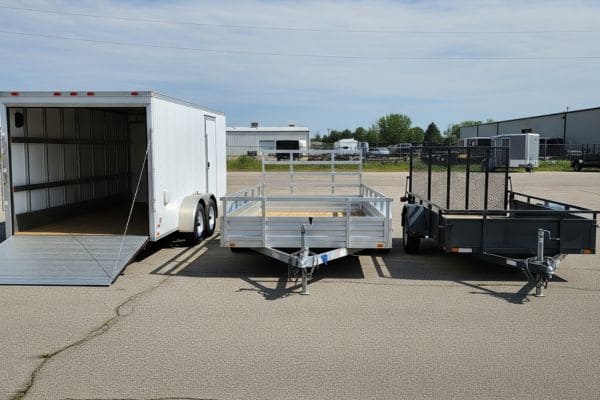
Whether you’re hauling tools to a job site, moving furniture, or towing recreational equipment, the trailer you choose makes a big difference. Not all trailers are created equal. In fact, there are several types of cargo trailers, each designed for specific tasks, environments, and vehicle setups.
Understanding the differences helps you match the trailer to your needs and avoid common issues like overloading or poor fuel efficiency. This blog will guide you through the most common utility trailer types, highlight both enclosed cargo trailer types and open cargo trailers, and offer practical insights into making the right choice.
Overview: Main Types of Cargo Trailers
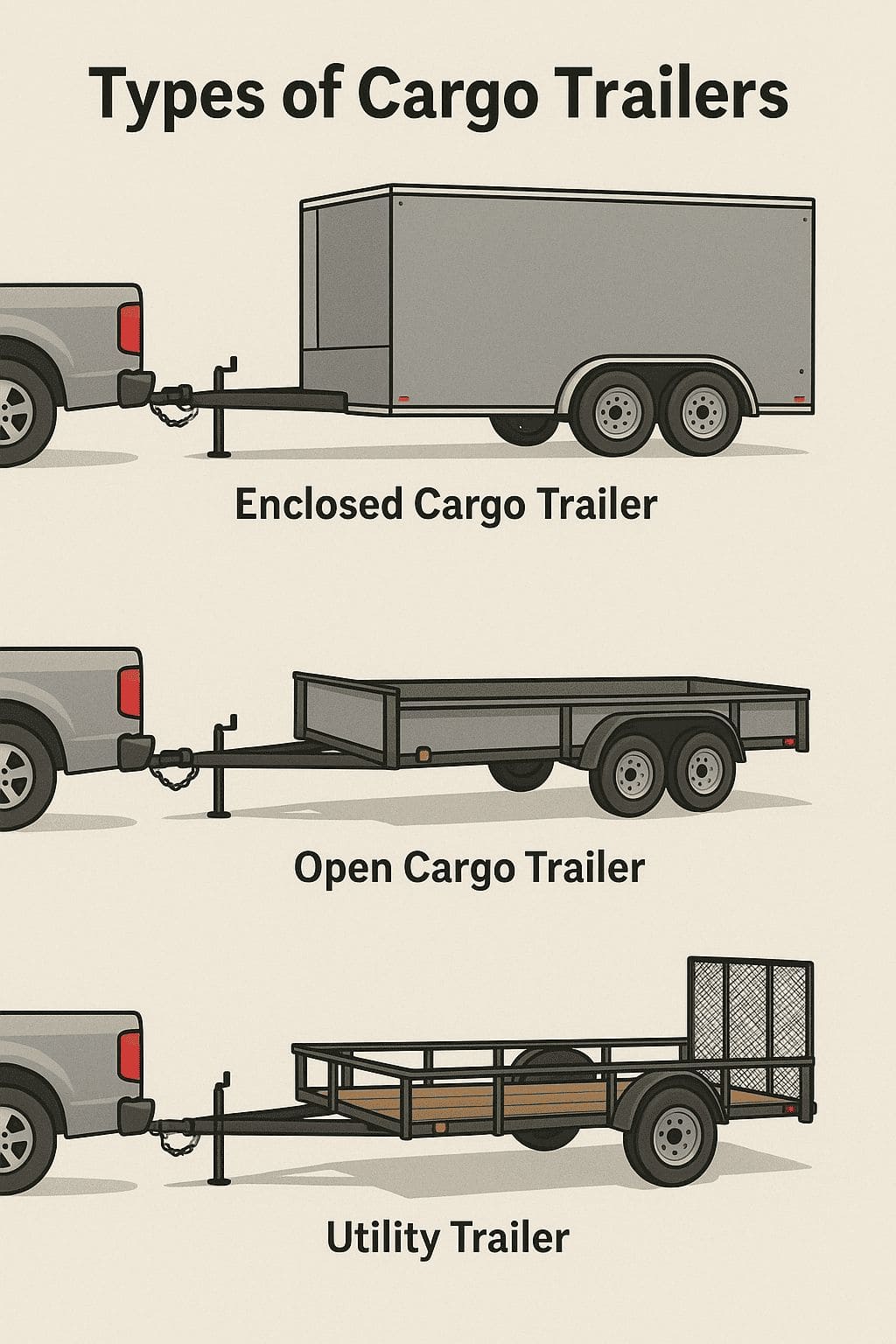
There are three broad types of cargo trailers you’ll encounter:
- Enclosed cargo trailers
- Open cargo trailers
- Utility trailers (a sub-category that includes both enclosed and open types)
Each has its own features, weight capacity, and intended use. Choosing between them depends on what you’re hauling, how often you use the trailer, and the kind of vehicle doing the towing.
For instance, if you need weather protection and security, enclosed cargo trailer types are ideal. But if budget and flexibility are your priorities, open cargo trailers or basic utility trailer types may be a better fit.
Enclosed Cargo Trailer Types
Enclosed cargo trailers are fully covered trailers with hard outer shells, usually made of aluminum or steel. They protect your cargo from rain, snow, wind, and theft. If you’re transporting valuable or delicate items—like musical instruments, electronics, furniture, or motorcycles—these trailers offer unmatched security and weather resistance.
a. Standard Enclosed Cargo Trailers
These are the most common enclosed cargo trailer types and are used for general hauling. They come in various sizes and are often customizable with shelving or tie-down systems.
b. V-Nose Trailers
These trailers have a V-shaped front that improves aerodynamics, which can lead to better fuel efficiency. The extra space in the front is often used for storage.
c. Car Haulers & Motorcycle Trailers
Designed for vehicle transport, these trailers have reinforced floors, ramp doors, and extra interior height to accommodate motorcycles, ATVs, or cars.
d. Concession & Custom Enclosed Trailers
These are highly specialized trailers used for mobile businesses like food trucks or mobile workshops. They’re built to meet local regulations and can include plumbing, electric hookups, and workstations.
Open Cargo Trailers Types
Open cargo trailers are flat or sided trailers without a roof or enclosure. They are often lighter, more affordable, and easier to load and unload. However, they offer no protection from the elements or theft, so they’re best for hauling items that aren’t easily damaged or stolen—like landscaping equipment, scrap metal, or lumber.
These trailers are a popular choice for seasonal workers, contractors, and homeowners needing a budget-friendly solution.
a. Utility Open Trailers
These are simple flatbeds with short side rails. They’re among the most common open cargo trailers, used for transporting small machinery, firewood, or yard waste.
b. Flatbed Trailers
Flatbeds trailers have no side rails or roof, offering maximum space and flexibility for large, odd-shaped loads like construction materials or pallets.
c. Landscape Trailers
These are similar to utility trailers but often come with features like mesh ramps and tool storage, specifically for landscaping businesses.
Utility Trailer Types and Their Applications
Utility trailers are among the most versatile and commonly used trailers. As a subcategory of open cargo trailers, they’re ideal for general hauling tasks like transporting lawn equipment, furniture, or tools. Within this group, there are several utility trailer types that cater to specific needs.
a. Single Axle Utility Trailers
These are great for light-duty work. With just one axle, they’re easy to maneuver, lightweight, and budget-friendly. Many homeowners use them for weekend yard work or small deliveries. However, they have limited weight capacity and are not ideal for long-distance hauls.
b. Tandem Axle Utility Trailers
Tandem axle trailers feature two axles, which means they can carry more weight and offer better stability. These trailers are often used by contractors or landscapers who need to haul heavy tools or machinery. Their durability and load capacity make them one of the most popular utility trailer types in commercial use.
c. Dump Utility Trailers
Dump utility trailers are designed with hydraulic systems that let you tilt and unload material with ease. They’re perfect for transporting gravel, soil, or debris. Landscapers and construction crews often rely on this style to save time on job sites.
d. Tilt Utility Trailers
These trailers allow the bed to tilt, making it easier to load and unload equipment like ATVs, mowers, or small vehicles. If you transport items without a loading ramp, this trailer type may be the most efficient.
Cargo Trailer Features to Consider
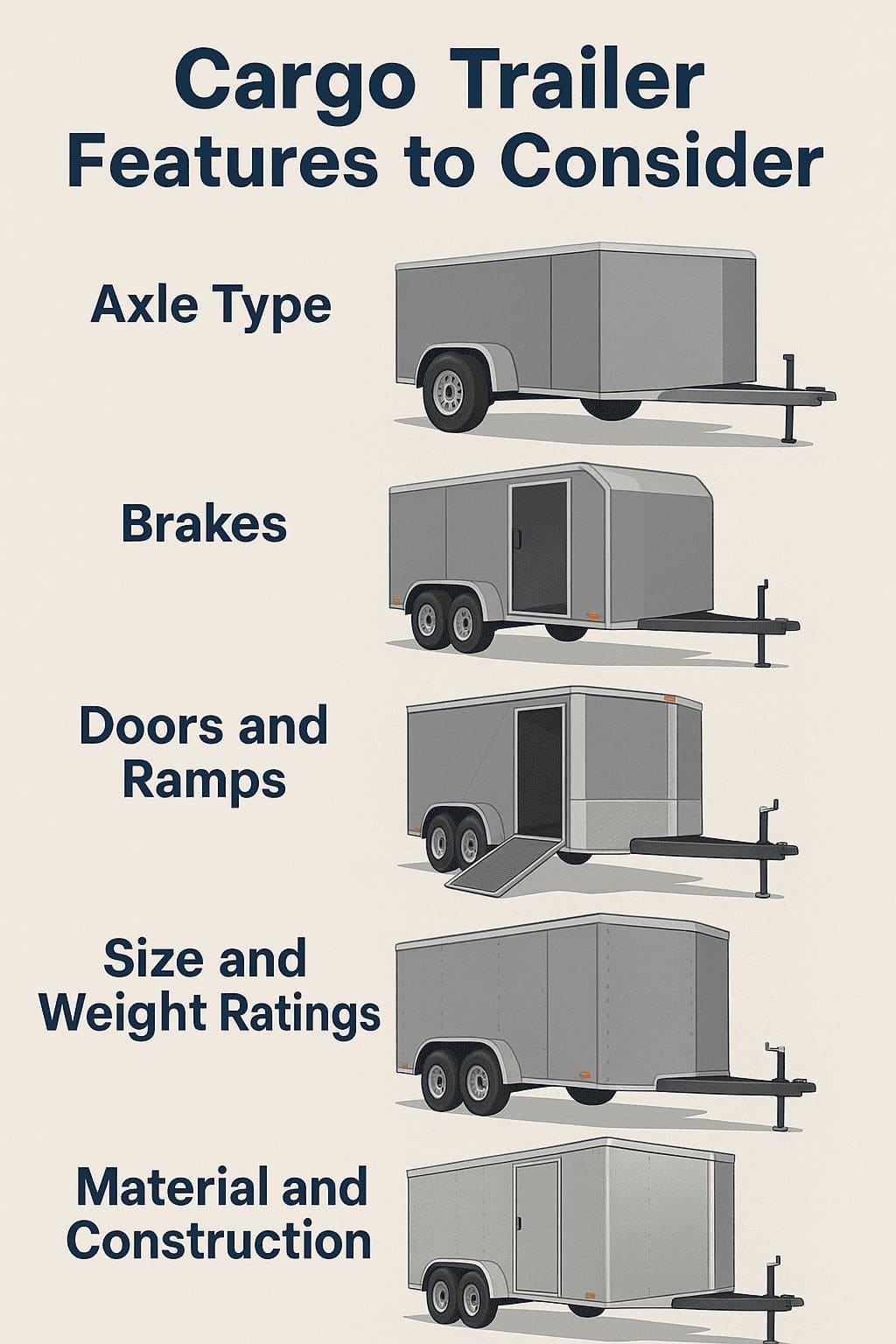
Choosing between the types of cargo trailers isn’t just about the shape or whether it’s enclosed or open. The features that come with the trailer also play a big role in usability, safety, and long-term value. Here are several things you should evaluate:
a. Axle Type
Single axle trailers are lighter and cheaper, but tandem axle models handle heavier loads and offer more stability—especially at highway speeds.
b. Brakes
Not all small trailers come with brakes. If you’re planning to haul heavier loads, consider trailers with electric brakes for added safety.
c. Doors and Ramps
Look for barn doors, ramp doors, or side access doors, depending on how you’ll load your cargo. Enclosed cargo trailer types often come with multiple access points for convenience.
d. Size and Weight Ratings
Know your vehicle’s towing capacity and match it with the Gross Vehicle Weight Rating (GVWR) of the trailer. An overloaded trailer is dangerous and illegal.
e. Material and Construction
Aluminum trailers are lighter and resist rust, while steel trailers offer durability at a lower price but may corrode over time if not maintained.
Choosing Based on Use: A Practical Cargo Trailer Guide
This section of the blog acts as a hands-on cargo trailer guide, helping you choose the right model based on your profession or lifestyle.
a. For Homeowners and DIYers
If you’re using your trailer occasionally—for yard cleanup, small moves, or weekend projects—a small utility trailer type or open cargo trailer may be perfect. It’s cost-effective, easy to tow, and doesn’t require much maintenance.
b. For Contractors and Builders
Professionals need durability and space. Tandem axle utility trailers or enclosed cargo trailer types provide security for tools, weather protection, and higher load capacity.
c. For Recreation and Travel
Hauling bikes, camping gear, or ATVs? A V-nose enclosed cargo trailer offers room and safety. If exposure to the weather isn’t a concern, a flatbed open cargo trailer might do the trick.
d. For Commercial Hauling
Food vendors, landscapers, and movers often need custom enclosed trailers, dump trailers, or tilt utility trailers. These are built for efficiency and long hours on the road.
Maintenance and Licensing Requirements
No matter which of the types of cargo trailers you choose, routine maintenance is essential for safety and long-term performance. Regular checks include:
- Tire pressure and tread depth
- Brake system function (especially for tandem axle trailers)
- Wiring and lighting systems
- Hitch and coupler wear
- Rust inspection on steel frames
Licensing requirements vary by state or region. In most cases, trailers above a certain weight must be registered and may require an inspection. Always verify local laws before hitting the road.
Also, ensure that the towing vehicle is rated for the trailer’s weight. Overloading is not just unsafe—it can also void insurance coverage and lead to fines.
Final Thoughts: Which Trailer Is Right for You?
Selecting the right trailer starts with understanding the types of cargo trailers available—and how they match your real-world needs. Whether you need a compact solution for weekend projects or a heavy-duty setup for daily commercial use, the right choice saves time, money, and effort in the long run.
If you’re a homeowner or hobbyist, a basic utility trailer type—like a single axle open trailer—might be all you need. It’s simple to use, affordable, and easy to tow. On the other hand, contractors, landscapers, and small businesses will often benefit more from tandem axle or enclosed cargo trailer types, which provide better load handling and cargo protection.
Recreational users who transport bikes, kayaks, or ATVs will likely find open cargo trailers convenient. But if security and weather protection are priorities, an enclosed cargo trailer offers better peace of mind—even if it comes at a higher price point.
Ultimately, this cargo trailer guide isn’t just about picking a trailer—it’s about understanding how your lifestyle, work, or business impacts what kind of trailer you need. Consider where you’ll be driving, what kind of cargo you’ll carry, and how often you plan to use it.
If you’re still uncertain, it’s wise to speak with experienced trailer dealers like RMZ Trailer Depot.
Contact RMZ Trailer Depot today and make your trailer purchase with confidence.
About Author:

Leave a Reply