
 Reviews



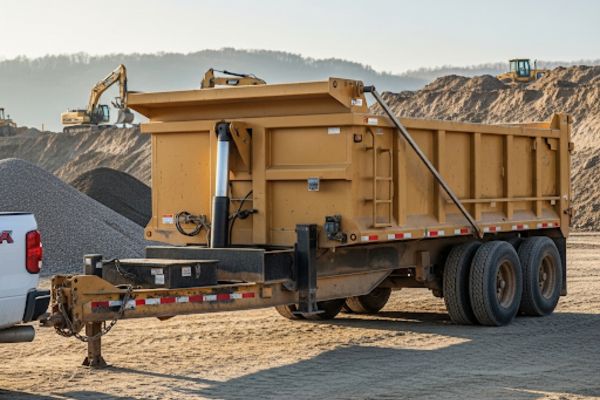
The year 2025 brings smarter tools, more durable materials, and updated safety standards in the trailer industry. If you’re considering buying a dump trailer, you’re stepping into a market that’s more competitive and tech-forward than ever before. With electric lifts, advanced battery systems, and reinforced steel beds becoming standard, knowing exactly what to look for is critical.
This dump trailer buying guide will help you explore all your options—from trailer size and hydraulic systems to axle ratings and licensing. Whether you’re hauling construction debris, landscaping waste, or gravel, understanding your needs and matching them with the best dump trailer features is essential to avoid costly mistakes.
Know Your Needs: Load Type, Weight, and Frequency of Use
The first step in buying a dump trailer is to assess your needs in detail. Dump trailers come in various sizes and configurations, and choosing the wrong one can be a costly mistake—both in money and performance.
Ask yourself:
- What will you haul most often? Gravel, dirt, wood, or scrap metal?
- How much weight will you be moving regularly?
- Will you use the trailer weekly, daily, or seasonally?
For light landscaping or farm use, a smaller single-axle dump trailer may work. For contractors or demolition crews, a heavy-duty tandem axle with high load capacity is ideal.
Matching your hauling habits with the right specs is a vital part of your dump trailer checklist. Overloading the wrong trailer can damage your truck, cost you in fines, and shorten your trailer’s life.
Dump Trailer Types: Gooseneck vs. Bumper Pull
When buying a dump trailer, the trailer type you choose affects towing safety, stability, and turning radius. Two main types dominate the market:
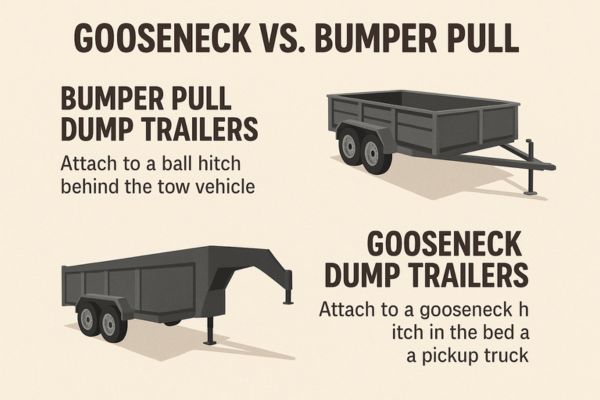
a. Bumper Pull Dump Trailers
These are attached to a standard hitch at the back of your vehicle. They’re easy to use and are perfect for smaller loads. They’re also more affordable and require less towing skill. However, they can sway at higher speeds or under heavy loads.
b. Gooseneck Dump Trailers
These connect directly over the rear axle of your truck bed, offering better stability and weight distribution. Goosenecks are ideal for heavy commercial use and offer more cargo space. They are more expensive but provide added safety and control.
Understanding the pros and cons of each type helps refine your dump trailer buying tips. Choose based on what you’ll haul and how far and often you’ll be on the road.
Key Components: What to Check Before You Buy
Before handing over your money, inspect the core parts of the trailer. This is one of the most crucial steps in your dump trailer checklist.
Key components to inspect include:
- Frame Strength: Look for I-beam or tube steel frames. These provide better durability and resistance to bending.
- Hydraulic System: A reliable pump and scissor-lift or telescopic lift mechanism are essential for smooth dumping.
- Axles and Suspension: Tandem axles handle heavier loads and offer better road balance. Check for brake-equipped axles.
- Bed and Walls: Reinforced steel beds and sidewalls protect against wear. Some models offer removable sides for flexibility.
- Battery and Charger: Many modern dump trailers in 2025 come with deep-cycle batteries and solar or AC chargers. Make sure it’s included or upgrade-ready.
This checklist ensures that you’re not just buying a dump trailer based on price or looks. It helps you focus on the best dump trailer features that will affect long-term use and safety.
Best Dump Trailer Features to Look for
If you’re buying a dump trailer, you’ll find several innovative upgrades that can make your work faster, easier, and safer. Here are some of the best dump trailer features to prioritize:
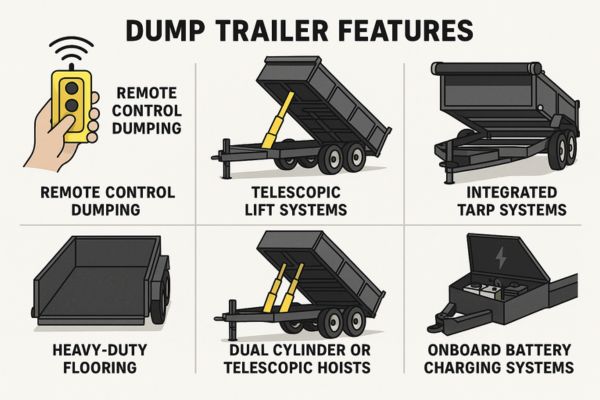
- Remote Control Dumping: Many trailers now include wireless remotes to operate the hydraulic lift from a distance.
- Telescopic Lift Systems: These offer more power and better dumping angles than standard scissor lifts.
- Integrated Tarp Systems: Keeping loads secure and legal during transport is easier with built-in tarp kits.
- Heavy-Duty Flooring: Look for 10-gauge steel or thicker for long-term durability.
- Dual Cylinder or Telescopic Hoists: These provide smoother, more balanced dumping—even with uneven loads.
- Onboard Battery Charging Systems: Many 2025 models come with solar or AC-compatible chargers.
When evaluating trailers, these upgrades go beyond basic utility and represent value over time.
Create a Detailed Dump Trailer Checklist
Before making a final decision, create your own dump trailer checklist. This list helps ensure you’re covering all the critical areas—structural, electrical, and hydraulic—before committing to a purchase.
Here’s a sample checklist to start with:
| Checklist Item | Why It Matters? |
| Frame type (I-beam, C-channel, tube) | Affects strength and lifespan |
| Bed material and thickness | Impacts durability and load capacity |
| Hoist type (scissor, telescopic) | Controls how efficiently it dumps |
| Axle rating and brake type | Determines safe towing limits |
| Battery and charging setup | Impacts dump performance and downtime |
| Warranty and brand reputation | Tells you about after-sale support |
By using a dump trailer checklist, you minimize the chance of missing critical components that impact safety or usability.
Smart Dump Trailer Buying Tips for First-Time Buyers
If this is your first time investing in a dump trailer, don’t rush. Some of the most useful dump trailer buying tips come from experienced users and dealers who’ve seen both good and bad purchases.
Here are several smart tips:
- Go slightly bigger than you think: First-timers often underestimate how much they’ll haul.
- Inspect welds and paintwork: Rust spots or sloppy welds signal low build quality.
- Verify weight ratings: Don’t just assume it can haul what your truck can tow. Confirm Gross Vehicle Weight Rating (GVWR).
- Ask about service access: Trailers with poor battery access or tight hydraulic setups can be frustrating to maintain.
- Consider resale: Branded trailers with good online support and parts availability hold their value longer.
Top Mistakes to Avoid When Buying a Dump Trailer
Even experienced buyers fall into common traps. If you’re buying a dump trailer, here are a few major pitfalls to avoid:
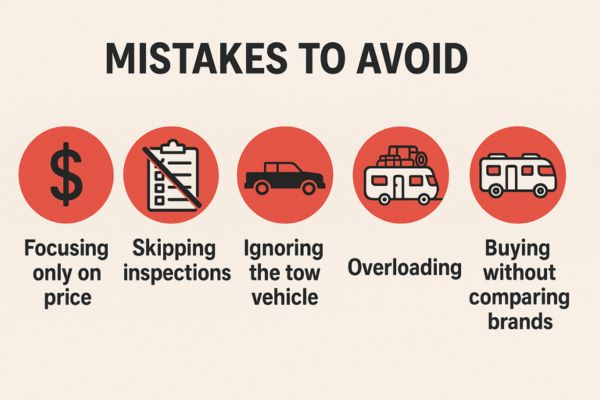
- Focusing only on price: Cheaper trailers often lack quality components and solid warranties.
- Skipping inspections: Never buy without inspecting brakes, wiring, and the hydraulic system in action.
- Ignoring the tow vehicle: Your truck needs to match the trailer’s weight—plus the load. Don’t assume it’s strong enough.
- Overloading: Just because it fits in the bed doesn’t mean it’s within the legal or safe hauling limit.
- Buying without comparing brands: Stick with reputable brands known for durable frames and customer service.
2025 Trends: What’s New in Dump Trailer Technology
As technology continues to shape the hauling industry, buying a dump trailer is about more than just choosing a size or style. Today’s trailers come equipped with innovations that improve safety, efficiency, and ease of use.
Here are the top 2025 trends changing the dump trailer market:
- Smart Charging Systems: Many new trailers now include solar-compatible battery chargers and Bluetooth battery monitors. These help you manage power without guesswork.
- Modular Build Options: Customizable walls, toolboxes, and ramps let you adjust your trailer to fit seasonal or job-specific needs.
- Advanced Hoist Mechanisms: Telescopic and dual-cylinder hoists are becoming standard, replacing older scissor lifts in mid- to high-end models.
- Weather-Resistant Coatings: Powder-coated and zinc-treated frames are more common in 2025, offering better protection against rust and corrosion.
- Remote Controls and Smart Safety Features: Trailers now come with wireless remotes, backup sensors, and safety lockouts to prevent accidental lifts or drops.
Final Thoughts: Making the Right Investment for Long-Term Use
When it comes to buying a dump trailer, the right choice is one that fits both your present and future hauling needs. Taking the time to review a complete dump trailer checklist, research the best dump trailer features, and follow expert-backed dump trailer buying tips will save you from overspending—or worse, buying a trailer that doesn’t do the job.
Here’s a quick recap of what matters most:
- Know your hauling needs—weight, frequency, and material type.
- Compare trailer types—such as gooseneck vs. bumper pull—to match your vehicle and workload.
- Inspect all components carefully—axles, frames, batteries, and lift systems.
- Choose durability and safety over initial savings.
- Don’t skip trends—2025 models are smarter and stronger than ever.
Buying the right trailer isn’t just a transaction—it’s an investment in efficiency, safety, and peace of mind for years to come. At RMZ Trailer, we help you choose smart so you can haul with confidence. Explore our top-rated dump trailers today and experience the RMZ difference!
About Author:

Leave a Reply