
 Reviews



When it comes to hauling gear, equipment, or even your weekend toys, your trailer’s axle setup isn’t just a technical detail — it’s a game-changer. The debate between single vs tandem axle trailers is more than just about wheels. It’s about how far you’re going, how heavy you’re hauling, and how smoothly you want to ride.
Whether you’re new to towing or upgrading your rig, this blog breaks down everything you need to know through a clear and concise trailer axle guide. We’ll cover how these two types differ, where each one shines, and how to choose the right setup for your specific needs.
Let’s explore the axle trailer comparison to help you make the smartest choice before hitting the road.
What Is a Single Axle Trailer?
A single axle trailer is exactly what it sounds like — a trailer with one axle and two wheels, typically located at the center of the trailer’s load. This setup is common among lightweight trailers, including small utility trailers, compact cargo haulers, and beginner-friendly tow rigs.
Why it’s loved:
- Easier to maneuver in tight spaces
- More affordable upfront cost
- Lower maintenance (only two wheels, tires, and brakes)
The single vs tandem axle trailers decision often starts with weight and purpose. Single axles are ideal for loads under 3,000–3,500 lbs. They are also a top pick for people who want to tow without needing a heavy-duty truck.
What Is a Tandem Axle Trailer?
A tandem axle trailer features two axles placed closely together. This gives the trailer four wheels instead of two, and with it, a serious upgrade in terms of stability and load capacity.
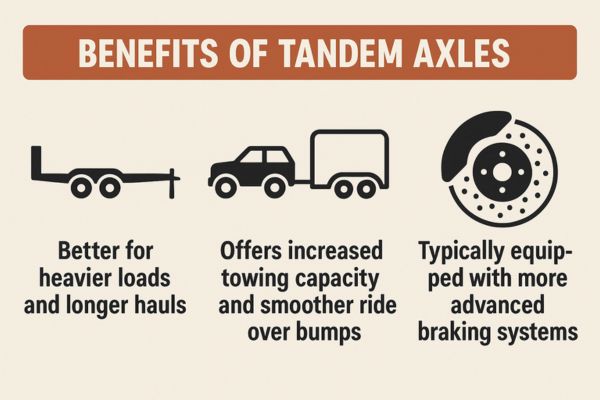
Benefits of tandem axles:
- Better for heavier loads and longer hauls
- Offers increased towing capacity and smoother ride over bumps
- Typically equipped with more advanced braking systems
When it comes to single vs tandem axle trailers benefits, tandem trailers dominate in performance, durability, and ride comfort — especially when fully loaded. They also have a higher weight rating (up to 14,000+ lbs), making them a go-to for pros and contractors.
Tandem trailers are built for endurance. Whether you’re towing construction gear, landscaping materials, or a car, tandem axle trailers are engineered to handle it.
Axle Trailer Comparison: How They Differ?
Let’s break down the head-to-head axle trailer comparison between single and tandem axle trailers.
In terms of towing capacity comparison, tandem axle trailers clearly outperform single axles. But that doesn’t mean one is “better” than the other — it all depends on your needs.
If you’re hauling smaller loads around town, a single axle trailer may be enough. But if you’re heading down the highway with a heavy payload, a tandem axle trailer is the smarter and safer bet.
Ride Quality: Smooth Sailing or Bumpy Roads?
When you’re hauling over long distances, the ride quality of your trailer isn’t just a luxury—it’s a safety factor. One of the most significant differences in the single axle vs tandem axle trailer debate lies in how each one handles rough roads, bumps, and wind.
- Single axle trailers can feel twitchy or unstable at highway speeds, especially when fully loaded. With only two wheels supporting the weight, road imperfections hit harder.
- Tandem axle trailers, on the other hand, distribute weight across four wheels, which smooths out the ride and increases stability on uneven surfaces.
This difference is more than comfort—it can affect cargo integrity. If you’re transporting delicate equipment or tools, tandem axles reduce bounce and sway.
Cost Comparison: Upfront vs Long-Term Value
Budget plays a big role when choosing between a single axle vs tandem axle trailer. But there’s more to the cost than just the price tag.
A. Single Axle Trailers:
- Lower purchase price
- Fewer tires and brake components = cheaper maintenance
- Ideal for casual or low-frequency hauling
B. Tandem Axle Trailers:
- Higher upfront cost (more axles, brakes, suspension)
- Greater resale value over time
- More expensive to maintain—but better suited for professional use
If you’re on a budget and plan to tow only occasionally, a single axle trailer makes financial sense. But if you’re running a business, hauling frequently, or want your trailer to last for years, investing in a tandem axle trailer often pays off long-term.
Durability & Maintenance: Which One Lasts Longer?
Durability isn’t just about the frame — it’s about how the trailer holds up under pressure, mileage, and weather. Here’s where tandem axles often prove their worth.
- Single axle trailers have fewer moving parts, which can mean fewer things to break. But they also carry more load per tire, which increases wear.
- Tandem axle trailers spread weight across four tires, easing the strain on each component. This makes them more durable for heavy or constant use.
When it comes to trailer axle guide durability tips, remember this: if you’re planning heavy-duty hauling—landscaping gear, construction equipment, or ATVs—a tandem axle trailer is engineered to handle more abuse.
Maneuverability: Tight Turns or Wide Loops?
When navigating narrow streets, tight job sites, or cramped storage areas, maneuverability becomes a deal-breaker. In the ongoing single axle vs tandem axle trailer debate, single axles win when it comes to agility.
- Single axle trailers are lighter and have a smaller turning radius. This makes them easier to maneuver, especially for beginners or in urban environments.
- In contrast, tandem axle trailers need more space to turn and park. While they offer better stability, they’re not as forgiving in tight spots.
If you’re frequently backing into tight loading zones, hauling gear around the city, or parking at home, the maneuverability of a single axle trailer will save time and stress.
Braking System: Stopping Power Matters
Here’s a safety point many overlook: braking. A trailer’s ability to stop smoothly is critical—not just for your gear, but for everyone on the road.
- Most single axle trailers don’t come with brakes, especially in lighter weight classes. While this keeps the trailer light, it puts more strain on the tow vehicle.
- Tandem axle trailers, especially those over 3,000 lbs, almost always include braking systems. This gives them better control and shorter stopping distances.
From an expert towing capacity comparison standpoint, tandem axles are designed to handle more load with safer stops—especially on slopes or wet roads. More axles = more braking power.
For heavier cargo and long-distance hauls, investing in a trailer with electric brakes (typically found on tandem axle trailers) is a smart, safety-first move.
Fuel Efficiency: What’s Cheaper to Tow?
Let’s talk about savings at the pump. Fuel economy is a big factor when deciding between single vs tandem axle trailers—especially with rising fuel prices.
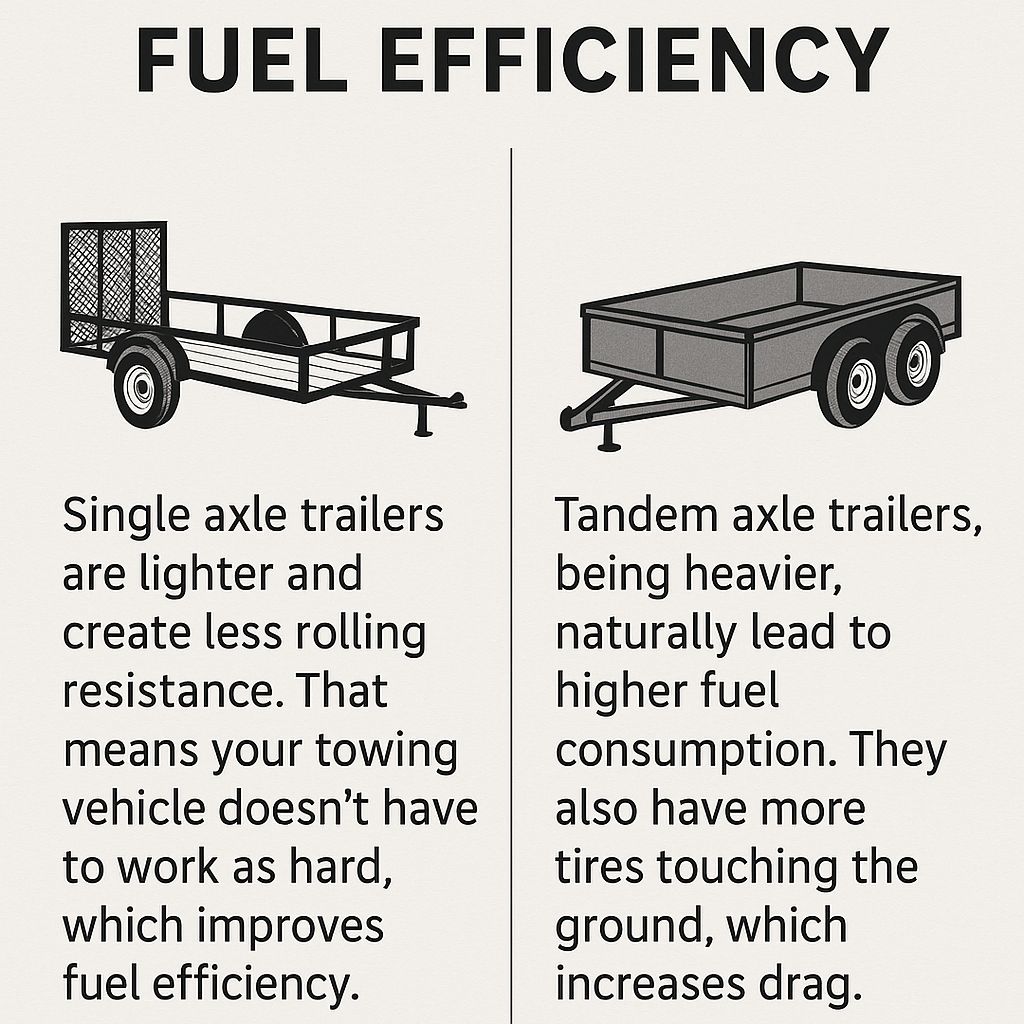
- Single axle trailers are lighter and create less rolling resistance. That means your towing vehicle doesn’t have to work as hard, which improves fuel efficiency.
- Tandem axle trailers, being heavier, naturally lead to higher fuel consumption. They also have more tires touching the ground, which increases drag.
If you’re hauling short distances or small loads, you’ll likely save more with a single axle. But if your job requires hauling heavy equipment frequently, the fuel savings of a single axle may not outweigh the durability of a tandem.
Maintenance Needs: Simpler Isn’t Always Better
When comparing single vs tandem axle trailers, the conversation isn’t complete without diving into maintenance. After all, every mile you tow brings wear and tear — and more axles mean more parts to inspect.
- Single axle trailers require less upkeep. With just one axle, two tires, and fewer bearings and brakes (if equipped), they’re cheaper to maintain over time. This makes them a go-to for DIYers and budget-conscious buyers.
- On the other hand, tandem axle trailers have double the hardware — four tires, two axles, and usually a braking system. That means higher maintenance costs, more frequent inspections, and more time in the garage.
Still, with heavier payloads and longer distances, tandem trailers offer more durability and smoother wear across parts. This can extend the trailer’s overall life, even if routine upkeep is a bit more demanding.
Best Use Cases: Which Trailer Fits Your Needs?
Choosing between a single axle and a tandem axle trailer really comes down to how — and where — you’ll be using it.
If you’re hauling light equipment, tools, or household items for short distances, a single axle trailer is likely all you need. Its lightweight design, easier maneuverability, and lower cost make it ideal for weekend DIYers, homeowners, or small business owners looking for efficiency without the bulk.
However, if you’re transporting heavy-duty cargo, construction materials, landscaping gear, or even multiple ATVs over longer distances, a tandem axle trailer is the clear winner. With greater towing capacity, enhanced stability, and added safety at higher speeds, it’s built for serious hauls and tough conditions.
At RMZ Trailers, we help you choose the right trailer based on your exact needs — no guesswork, just performance.
Ready to find your perfect trailer? Explore our full range of single and tandem axle trailers at RMZ Trailers or contact us today for expert guidance.
Frequently Asked Questions
1. What’s the main difference between a single axle and a tandem axle trailer?
A single axle trailer has one axle and two wheels, making it lighter, easier to maneuver, and more affordable. A tandem axle trailer has two axles (four wheels), offering greater stability, higher load capacity, and better ride quality — especially for long-distance or heavy-duty towing.
2. Which trailer type is better for highway travel?
For highway travel, a tandem axle trailer is the better choice. Its dual axles provide improved stability, reduced sway, and enhanced safety at higher speeds. It also handles bumps and road imperfections better, offering a smoother ride.
3. Are tandem axle trailers harder to maintain?
Yes, tandem axle trailers typically require more maintenance because they have more tires, axles, and usually include a braking system. However, they also tend to last longer and wear more evenly when used for heavy loads or frequent hauling.
4. Can I tow a single axle trailer with a standard SUV or pickup truck?
In most cases, yes. Single axle trailers are lightweight and suitable for towing with standard SUVs or light-duty pickup trucks — especially when hauling under 3,500 lbs. Always check your vehicle’s towing capacity first.
5. How do I decide between a single axle and tandem axle trailer?
Consider your hauling needs, cargo weight, towing distance, and road conditions.
a. Choose a single axle if you tow light loads occasionally and need maneuverability.
b. Opt for a tandem axle if you tow heavier items, travel long distances, or value stability and safety.
About Author:

Leave a Reply